Gas Fireplace Repair in St. Louis, MO
Most gas fireplace problems come down to a failed thermocouple or thermopile, a dirty pilot assembly, a bad igniter, or a blocked vent. We diagnose with instruments rather than replacing parts and hoping, then quote the repair before doing it.
A gas fireplace is a gas appliance, and it should be treated like one. When it does not light, the honest answer is usually a worn part — but a gas smell or a fireplace that keeps shutting itself off is the system telling you something, and those are not problems to work around.
How this gets priced
Starts with the $69 inspection
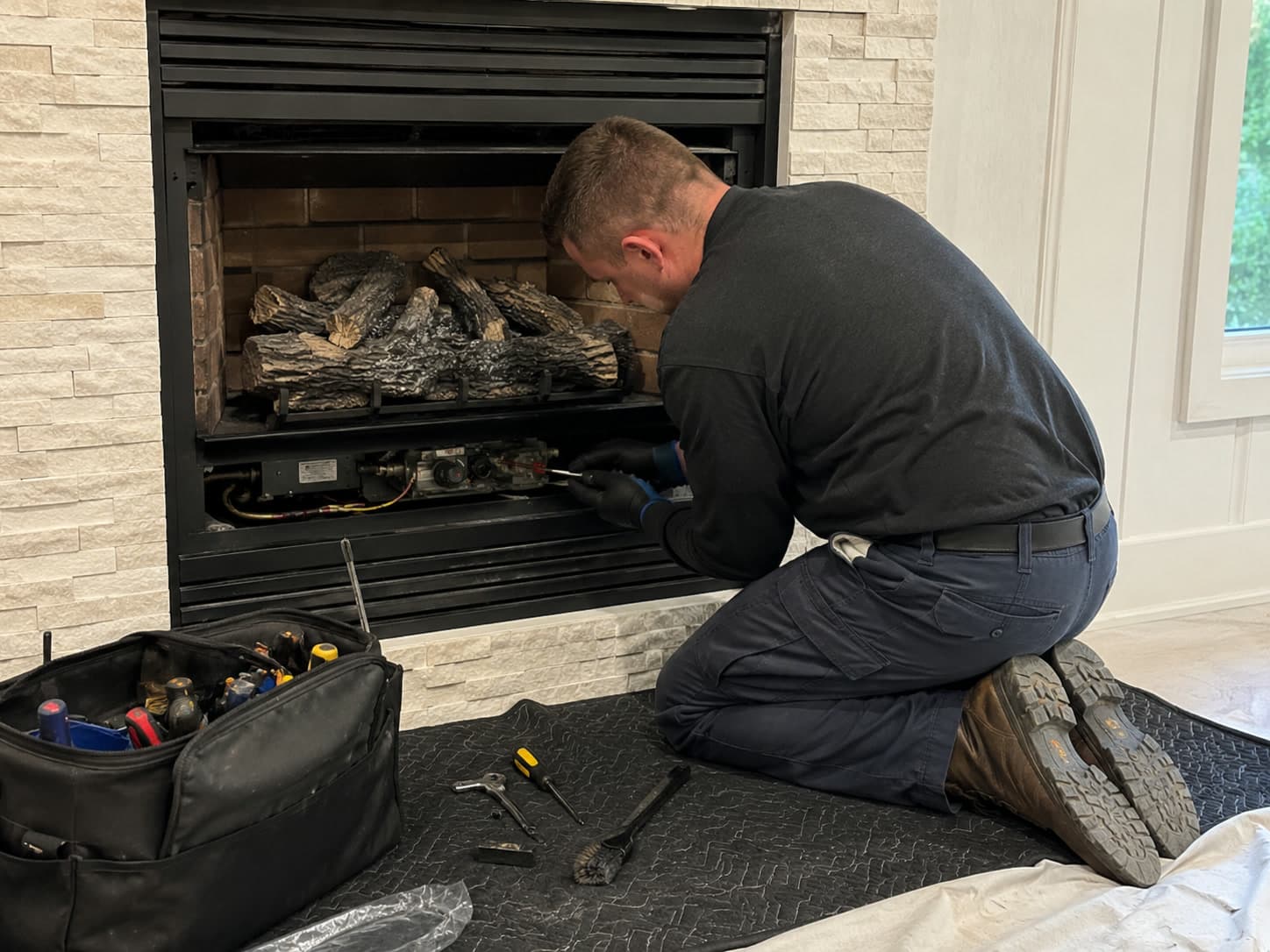
Depends on which component failed and whether the part is still manufactured for your model. The $69 inspection covers the diagnosis, you get a fixed price before we replace anything, and the $69 comes off the repair.
How do I know I need gas repair?
If any of these describe your situation, it is worth having someone look. Most are cheap to fix early and expensive to fix late.
- The pilot light will not stay lit
- The fireplace clicks but will not ignite
- The flame is weak, yellow, or lifting off the burner
- The remote or wall switch does nothing
- You smell gas — leave the house and call the gas company first
- Soot is building up on the glass or the logs
- The blower is loud, rattling, or not running
- The unit shuts itself off after running for a while
- There is a strong odor when the fireplace runs
- It worked last winter but will not light now that it is cold again
- The pilot flame has grown bigger than it used to be, or turned yellow
- Vent-free (ventless) gas logs keep shutting themselves off
Why it matters
A gas fireplace that burns incorrectly or vents poorly produces carbon monoxide inside your home. Carbon monoxide has no smell and the early symptoms read like the flu. This is the reason gas appliances get an annual inspection.
Call (314) 887-7250What’s included
Exactly what happens when we come out, step by step.
- 1
Safety check before anything else
Gas pressure, connections, and a carbon monoxide reading. If there is a leak or a CO issue, that is what gets addressed first, before we talk about why it will not light.
- 2
Diagnose the actual fault
Test the thermocouple and thermopile with a meter, check the pilot assembly and igniter, inspect the gas valve, and verify the venting is clear. We measure rather than guess and replace parts hoping.
- 3
Repair and clean
Replace what failed, then clean the burner ports, pilot assembly, glass and logs. A large share of gas fireplace complaints are a dirty burner, not a broken one.
- 4
Verify venting and test
Confirm the vent is clear and drafting, run the unit through a full cycle, and re-check carbon monoxide with the fireplace operating.
Which brands do you repair?
- Heat & Glo
- Heatilator
- Majestic
- Superior
- Empire
- Napoleon
- Lennox
- Monessen
- Kozy Heat
- Real Fyre and Peterson gas logs
Direct-vent, B-vent and vent-free units, inserts and gas log sets. The brand matters less than the ignition system: a standing pilot and an electronic ignition fail in different ways, and we test whichever one you have. The make and model are on a metal plate behind the lower louvre panel; a photo of it helps us bring the right parts.
What St. Louis homeowners are calling about this fall
Real calls from this season, as the customer described the problem. Next to each is what that symptom usually turns out to be; the actual fault is found with a meter on site, not guessed over the phone.
O'Fallon
The pilot light will not stay lit.
Usually: Most often a weak thermocouple or thermopile, sometimes a dirty pilot assembly or a draft blowing the pilot out. We test both sensors with a meter before replacing anything.
St. Louis
A vent-free (ventless) gas fireplace is not working properly.
Usually: Usually the oxygen depletion sensor in the pilot, dirty or slightly out of position, shutting the gas off. It gets cleaned or replaced, never bypassed, and we take a carbon monoxide reading with the logs running.
St. Charles
Smelled gas around the fireplace last season; the gas to it has been off since. Wants it checked before turning it back on.
Usually: Typically a loose fitting, a tired flex connector or a valve starting to leak. Every connection gets leak-tested with the gas on, before the fireplace is lit. If you smell gas right now, leave the house and call Spire first.
St. Charles
The pilot went out and the fireplace has not been serviced in a while.
Usually: After months idle: a worn thermocouple or thermopile, or spiders and debris in the pilot tube. A clean of the pilot assembly and burner is often part of the fix.
St. Louis
The pilot flame has gotten bigger and turned yellow. The fireplace came with the house 11 years ago.
Usually: A dirty or partly blocked pilot orifice or air inlet, or gas pressure that has drifted. A yellow flame is incomplete combustion, so this one includes a carbon monoxide check.
O'Fallon
The wall switch only works some of the time, and there is an odd smell.
Usually: On millivolt systems the switch runs on power the thermopile makes, so a weak thermopile or a corroded switch wire looks like a bad switch. Any smell gets a leak test before anything else.
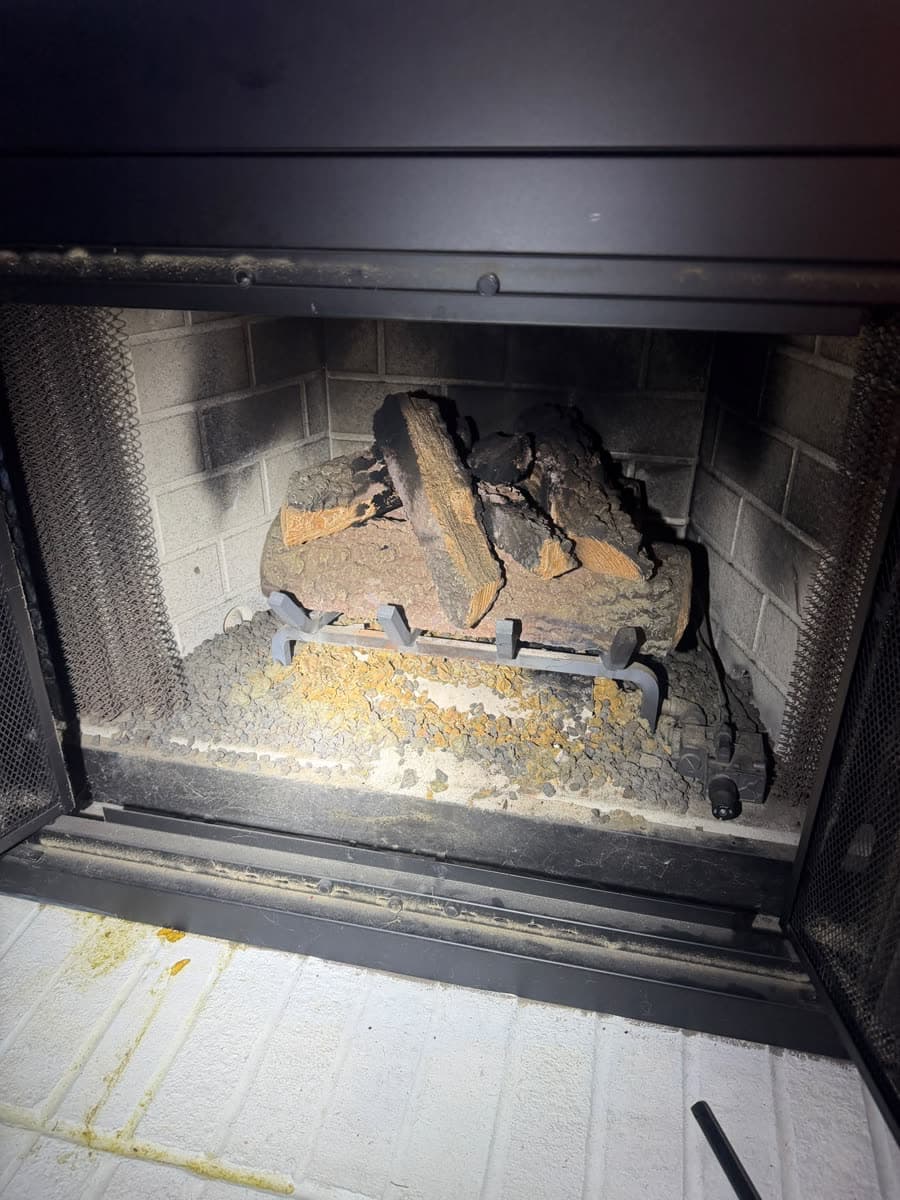
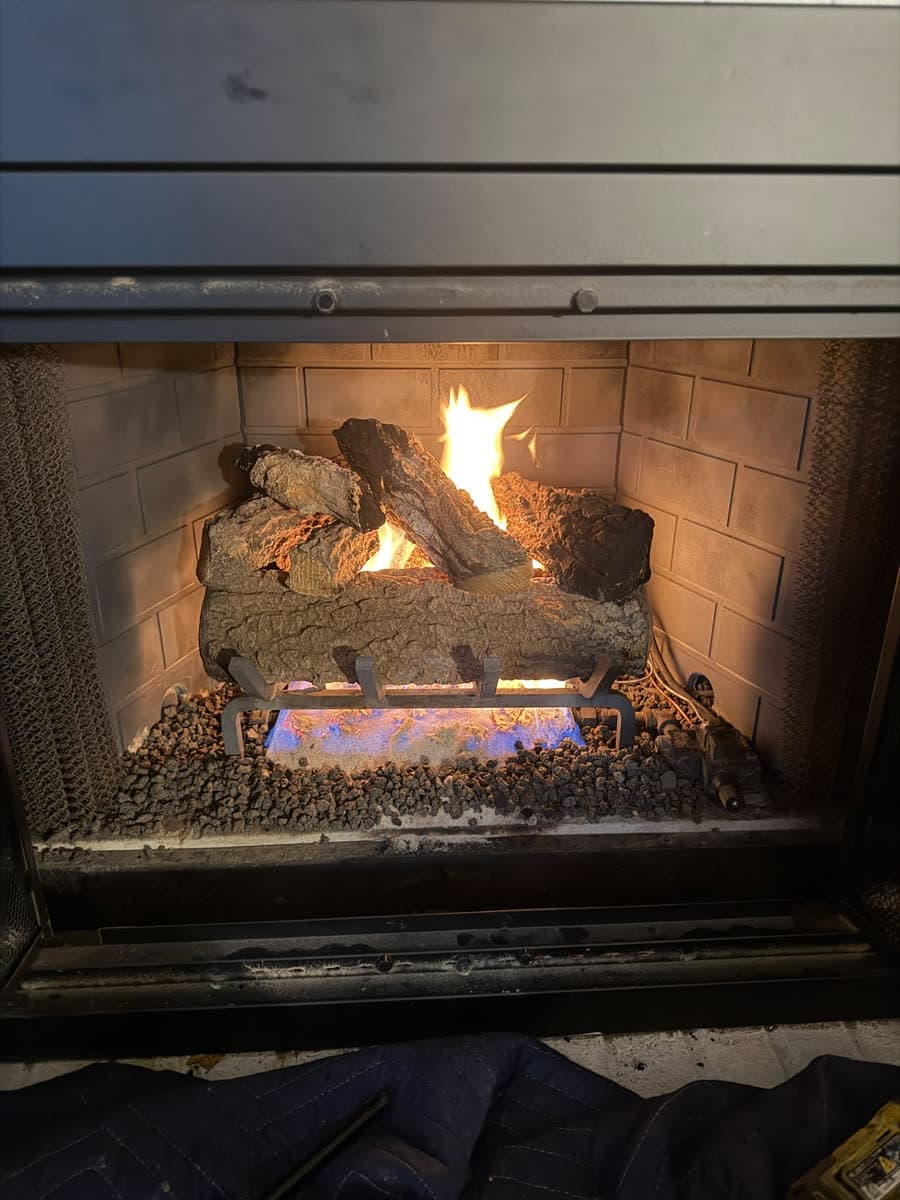
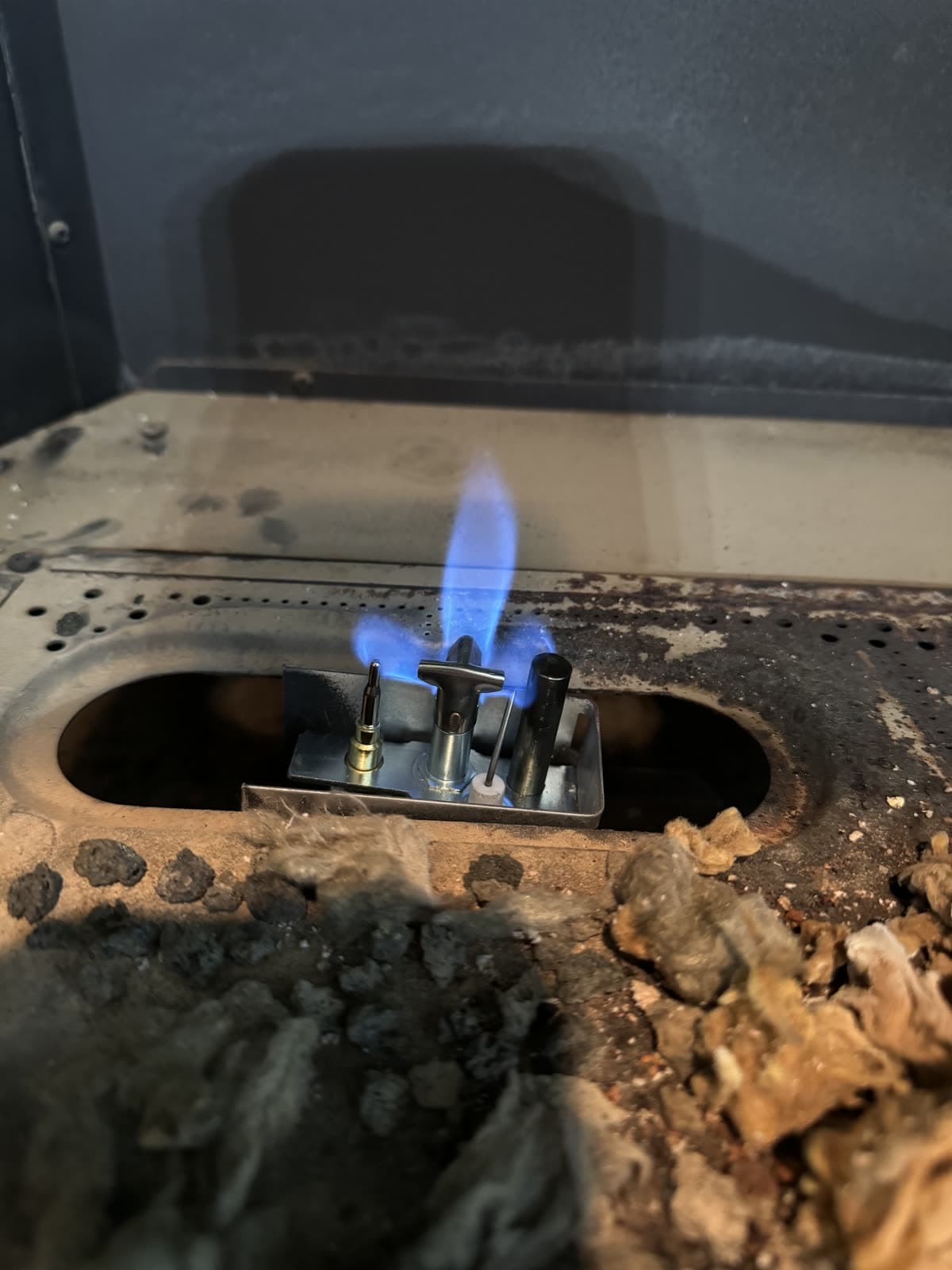
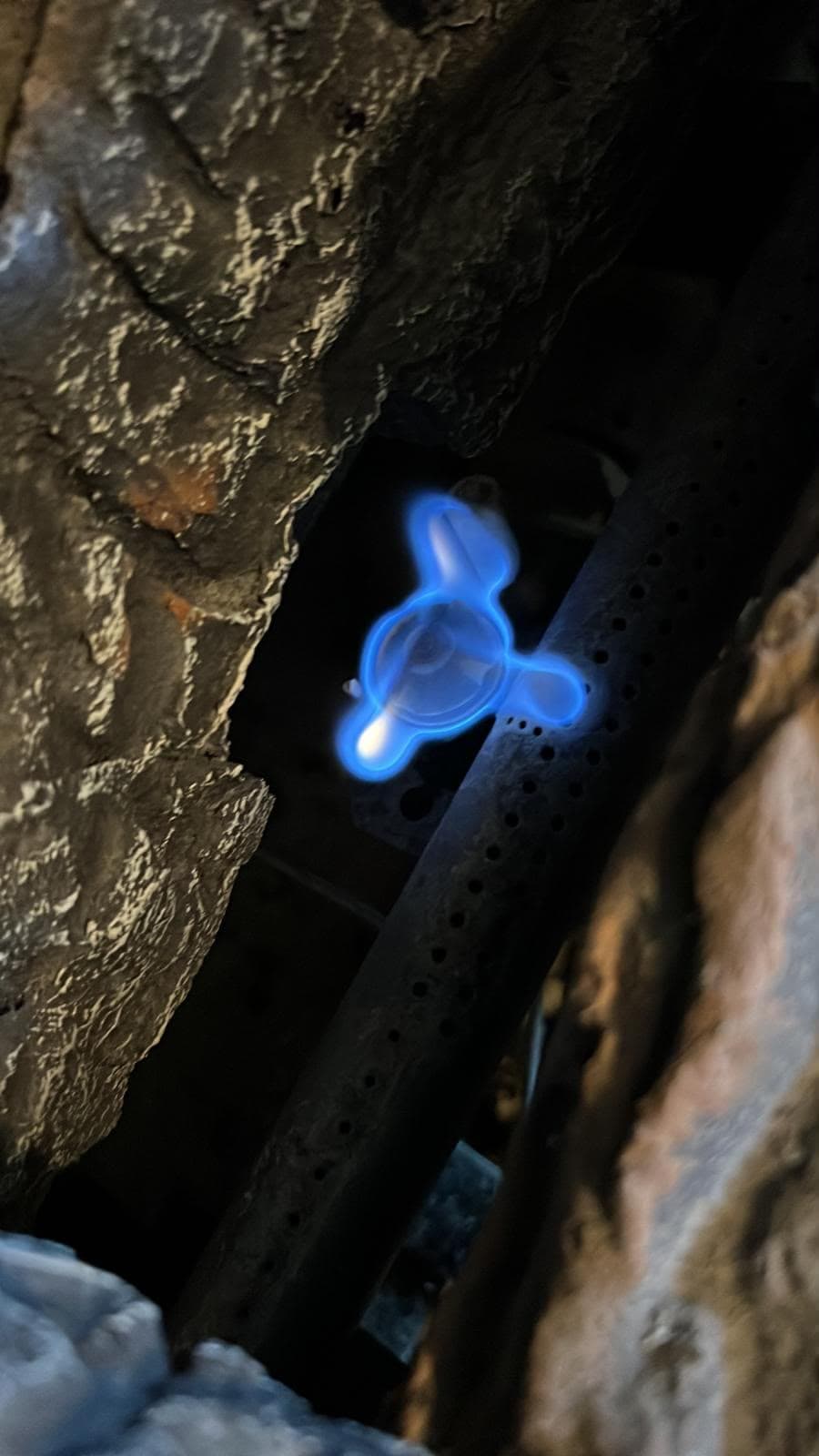
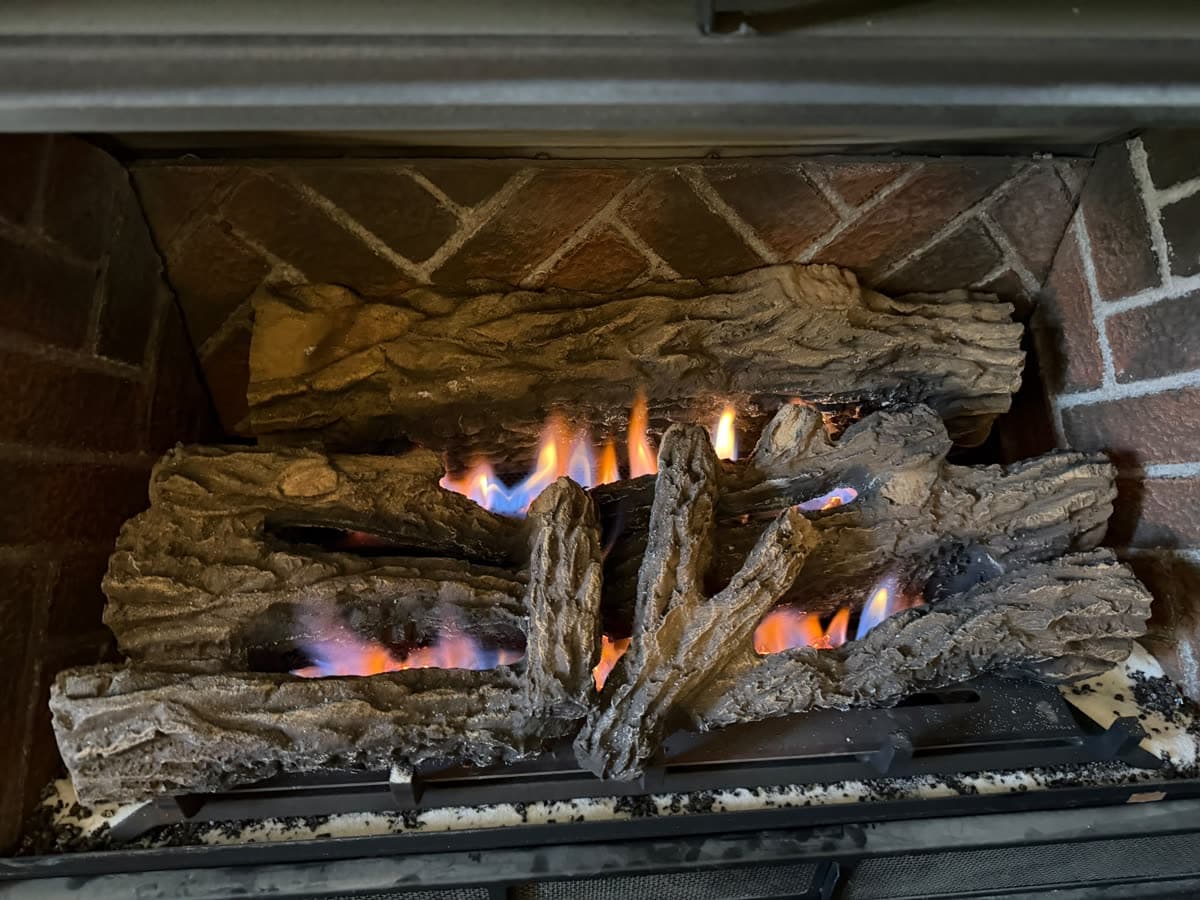
Before and after
Before
After
Gas Fireplace Repair: our work
Real jobs we have done in the St. Louis metro.
What customers say about our gas fireplace repair
5.0 from 60 Google reviews
“I have a direct gas fireplace that was giving me some trouble. Greg came by to my home in Saint Charles Missouri, and got the unit up and running like new. He was very helpful and informative, and I would use them in the future for my gas fireplace needs.”
Michael Z. · Google review
Gas Fireplace Repair: common questions
How much does gas fireplace repair cost in St. Louis?
It depends on what failed — a worn sensor and a failed gas valve are very different repairs, and parts availability varies a lot by make and model. We diagnose it properly, then tell you the price before we do the work.
Why won't my gas fireplace pilot light stay lit?
The most common cause by a wide margin is a failed thermocouple or thermopile — the small sensor that proves to the gas valve that a flame is actually present. When it weakens, the valve shuts the gas off as a safety measure. It is an inexpensive part. A dirty pilot orifice and a draft blowing the pilot out are the other frequent causes.
I smell gas near my fireplace. What should I do?
Do not operate the fireplace, do not use light switches, and do not look for the leak yourself. Leave the house and call Spire at 800-887-4173 or 911 from outside. Once the gas company has made it safe, we can diagnose and repair the appliance.
How often should a gas fireplace be serviced?
Once a year. Gas fireplaces do not produce creosote, but vents get blocked by debris and animal nests, burners get dirty and burn incorrectly, and safety components wear out. The annual service is about carbon monoxide, not soot.
My gas fireplace worked last winter. Why won't it light now?
Months of sitting idle is the usual cause. The pilot may have been turned off for the summer and needs relighting following the label on the valve; the batteries in the remote receiver or battery-backup ignition may be dead; and spiders and insects nest in the pilot tube and burner over the summer, blocking the gas. A thermocouple or thermopile that was already weak last spring often fails on the first cold night. If you smell gas, stop trying to light it.
My vent-free (ventless) gas fireplace keeps shutting off. Why?
Vent-free logs have an oxygen depletion sensor built into the pilot. It shuts the gas off if oxygen in the room drops, and it also trips when the pilot is dirty or the flame is not hitting the sensor properly, which dust and lint cause over time. It is a safety device and should never be bypassed. We clean or replace the pilot assembly and take a carbon monoxide reading with the logs running.
My pilot light got bigger and turned yellow. Is that a problem?
Yes, have it looked at. A healthy pilot is a small, mostly blue flame. One that has grown and turned yellow and lazy usually means a dirty or partly blocked pilot orifice or air inlet, or gas pressure that is off. A yellow flame is incomplete combustion, which is what produces carbon monoxide, so turn the fireplace off until it has been checked.
Why is my gas fireplace glass turning black?
Black sooting on the glass means incomplete combustion. Usually it is logs positioned incorrectly so the flame impinges on them, a dirty burner, or an air shutter that is out of adjustment. It is worth fixing quickly — incomplete combustion is also what produces carbon monoxide.
Gas Fireplace Repair across the St. Louis metro
We cover the full metro from University City. Chimney problems differ by neighborhood because the housing stock differs — here is what we see where.
Gas Repair in St. Louis
Predominantly 1890–1930 brick
Gas Repair in University City
Largely 1920s–1940s brick, Tudor and Colonial
Gas Repair in Clayton
1920s–1940s masonry, plus newer infill
Gas Repair in Kirkwood
Victorian through 1950s, wide mix
Gas Repair in Webster Groves
Victorian, Craftsman and 1920s bungalows
Gas Repair in Chesterfield
Mostly 1980s–2000s construction
Also serving Ladue, Ballwin, Creve Coeur, Maplewood, Brentwood, Florissant, St. Charles, Des Peres, Fenton, St. Peters, Arnold, High Ridge, Festus.
Related services
Gas Fireplace Inspection
A gas fireplace inspection checks the venting, gas connections, burner combustion and safety controls, and includes a carbon monoxide reading with the unit running. Ours is $69, credited back in full if you book a repair.
Chimney Inspection
A full chimney inspection with Total Chimney Services costs $69 anywhere in the St. Louis metro, and the entire $69 is credited back to you if you book a repair with us.
Fireplace Repair
Almost every fireplace fault belongs to one of three systems: the gas appliance, the firebox you burn wood in, or the chimney above it. They fail for different reasons, get fixed by different work, and the prices are not comparable — so the first job is working out which one you have. A $69 inspection tells you, with photographs, and the $69 comes off the repair when you book it.
Need gas fireplace repair in St. Louis?
Start with a $69 inspection and a photo report. Credited back in full when you book the work. Call (314) 887-7250.
Open 24/7 · Emergency service, day or night.