Google Guaranteed · Insured
5.0 from 60 Google reviews
Chimney Sweep, Inspection & Repair in St. Louis, MO
We inspect, sweep, repair and rebuild chimneys and fireplaces across the greater St. Louis metro. Every job starts with a $69 inspection and a photo report, so you know exactly what is wrong before you spend a dollar fixing it — and the $69 comes straight off your repair.
Open 24/7 · Emergency service, day or night.
Google Guaranteed · BBB Accredited
Background-checked and insured through Google Local Services, and accredited by the Better Business Bureau. See our BBB profile.
$69 inspection, credited back
Pay $69 for the inspection. Book the repair and we take the full $69 off.
Photo report, not a sales pitch
You see pictures of what we found and what it means, in plain English.
Fixed price before we start
You approve a number first. No hourly surprises at the end of the job.
What we do
All 14 of our services are chimney and fireplace work. We do not moonlight as a roofing or gutter company — this is the whole trade for us.
Chimney Inspection
A full chimney inspection with Total Chimney Services costs $69 anywhere in the St. Louis metro, and the entire $69 is credited back to you if you book a repair with us.
$69 · Learn more →
Chimney Sweep
A chimney sweep — chimney cleaning is the same job under a different name — removes creosote, soot and blockages from your flue so the chimney drafts properly and will not catch fire. We quote your chimney before we start, and you approve the price first.
Quoted up front · Learn more →
Chimney Repair
Chimney repair covers everything from a cracked crown or leaking flashing to a damaged flue liner. We start with a $69 inspection so you get photographs and one fixed price for exactly what your chimney needs — and the $69 comes off that price.
Starts with the $69 inspection · Learn more →
Chimney Leak Repair
Chimney leaks almost never enter where the water shows up. Water gets in at the crown, the flashing, the cap or through the masonry — then travels before it appears on your ceiling. The $69 inspection traces the actual source with photographs, and you get one fixed price to fix it.
Starts with the $69 inspection · Learn more →
Chimney Masonry & Tuckpointing
Tuckpointing is the process of grinding out failed mortar joints and packing in fresh mortar. Done properly, with mortar matched to the original, it buys a St. Louis chimney decades before the masonry needs attention again.
Starts with the $69 inspection · Learn more →
Chimney Rebuild
A chimney rebuild means taking the chimney down to sound masonry and rebuilding it. Most chimneys we are called out to look at need only the section above the roofline rebuilt, not the whole structure — and we will tell you that rather than sell you the bigger job.
Starts with the $69 inspection · Learn more →
Chimney Cap Installation
A chimney cap is a metal cover with mesh sides that sits on top of the flue. It keeps out rain, animals and debris, and stops burning embers from landing on your roof. It is the cheapest part of a chimney and it prevents the most expensive problems.
Starts with the $69 inspection · Learn more →
Gas Fireplace Repair
Most gas fireplace problems come down to a failed thermocouple or thermopile, a dirty pilot assembly, a bad igniter, or a blocked vent. We diagnose with instruments rather than replacing parts and hoping, then quote the repair before doing it.
Starts with the $69 inspection · Learn more →
Gas Fireplace Inspection
A gas fireplace inspection checks the venting, gas connections, burner combustion and safety controls, and includes a carbon monoxide reading with the unit running. Ours is $69, credited back in full if you book a repair.
$69 · Learn more →
Fireplace Repair
Almost every fireplace fault belongs to one of three systems: the gas appliance, the firebox you burn wood in, or the chimney above it. They fail for different reasons, get fixed by different work, and the prices are not comparable — so the first job is working out which one you have. A $69 inspection tells you, with photographs, and the $69 comes off the repair when you book it.
$69 inspection, credited back · Learn more →
Chimney Odor & Smoke Smell Removal
A chimney that smells is usually telling you three things at once: there is creosote in the flue, moisture is reaching it, and air is being pulled down the chimney into your room instead of up and out. Deodorizers only mask it. The $69 inspection identifies which of the three is driving the smell, and the fix removes it at the source.
Starts with the $69 inspection · Learn more →
Chimney Animal & Bird Removal
To a bird or a raccoon, an uncapped chimney looks exactly like a hollow tree — which is why they keep choosing it. We identify what is in the flue, remove it and the nesting material, sweep and sanitize what it left behind, and cap the chimney so the next one cannot get in. One legal note that matters: chimney swifts are protected under federal law, and an active nest cannot be removed until the young have flown.
Starts with the $69 inspection · Learn more →
Smoky Fireplace & Draft Repair
A fireplace that smokes into the room has a draft problem, not a fireplace problem. Either something is restricting the flue, or your house is pulling harder on the air than the chimney is. There are about six real causes, they need completely different fixes, and the $69 inspection tells you which one you actually have instead of guessing.
Starts with the $69 inspection · Learn more →
Chimney Relining
Relining means fitting a new liner inside the existing chimney so combustion gases have a sealed, correctly sized path out of the house. It is the fix when the clay tiles have cracked, when the flue was never lined at all, or when a new appliance needs a different sized flue than the one the chimney was built with.
Starts with the $69 inspection · Learn more →
Why chimneys fail in St. Louis
Chimney problems are not random and they are not the same everywhere. In this metro they come from a specific combination of climate and housing stock, and knowing that pattern is most of knowing where to look.
St. Louis runs through roughly 40 to 50 freeze-thaw cycles a year. Water soaks into brick and mortar, freezes, expands, and splits it apart. This is the single biggest cause of chimney damage in the region.
Much of the housing stock in St. Louis City, University City, Webster Groves and Maplewood was built before 1940. Those chimneys were built with soft lime mortar and often have unlined or clay-tile flues that have cracked with age.
Humid Missouri summers drive moisture into masonry that never fully dried out from winter, which accelerates spalling — the flaking and popping of brick faces.
Storm season brings straight-line winds and hail that damage crowns, caps and flashing, often without any visible sign from the ground.
What that means for your house
If your home was built before 1940
Expect soft lime mortar and original clay flue tiles that are now near or past the end of their service life. The critical detail is that these chimneys must be repointed with matched soft mortar. Modern Portland-heavy mortar is harder than the old brick, so the brick spalls instead of the mortar — a repair that causes the damage it was meant to prevent.
If your home was built 1950–1980
The masonry is usually sound but the crown is often just a thin skim of mortar with no overhang, which was standard practice then and cracks through within a few decades. Many of these chimneys also never had a cap installed at all.
If your home was built after 1985
You most likely have a factory-built fireplace with a metal chimney inside a framed chase rather than solid masonry. These have a real service life of roughly 20 to 30 years, and the part that fails first is almost always the chase cover on top.
Recent work in St. Louis
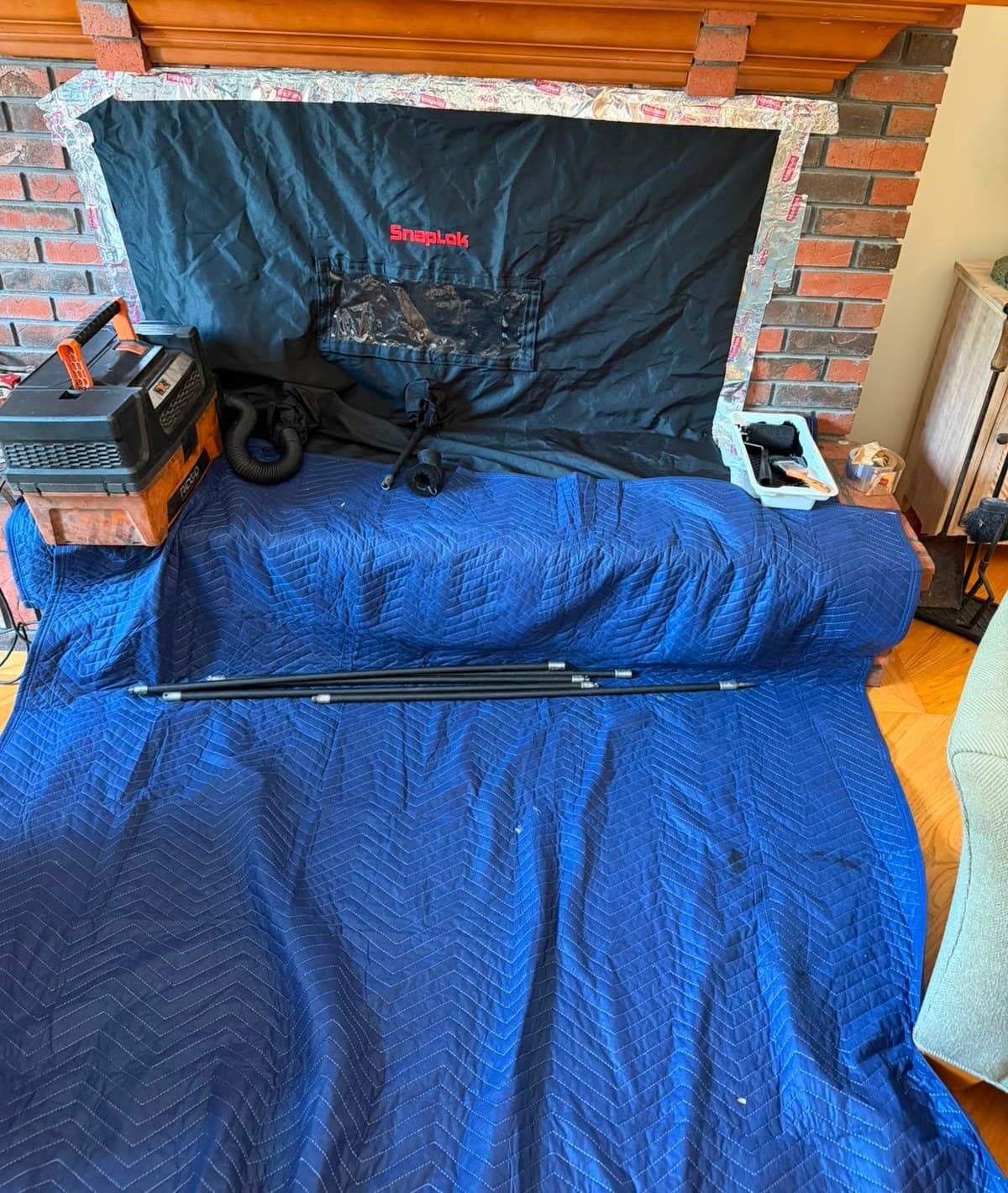
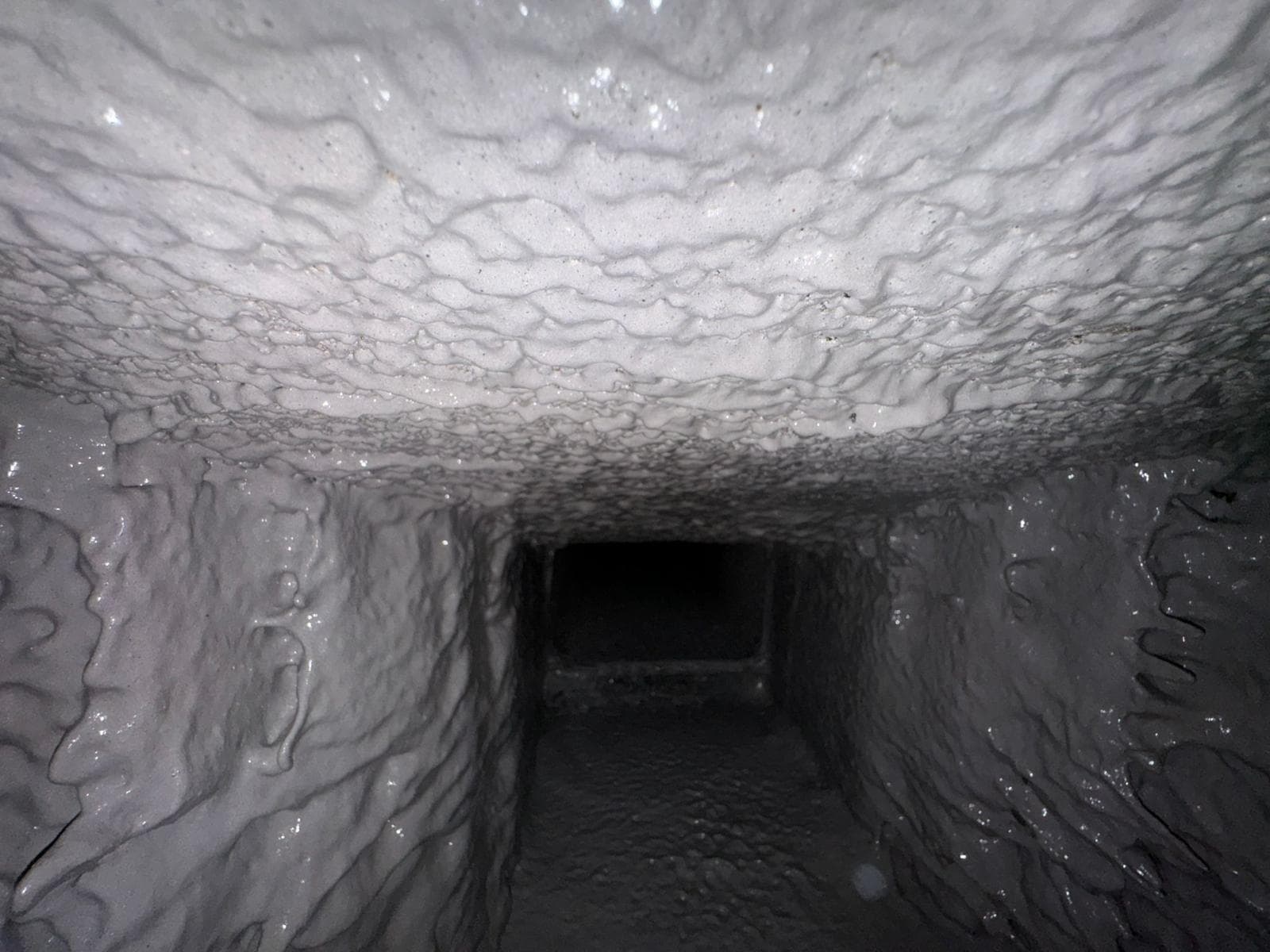
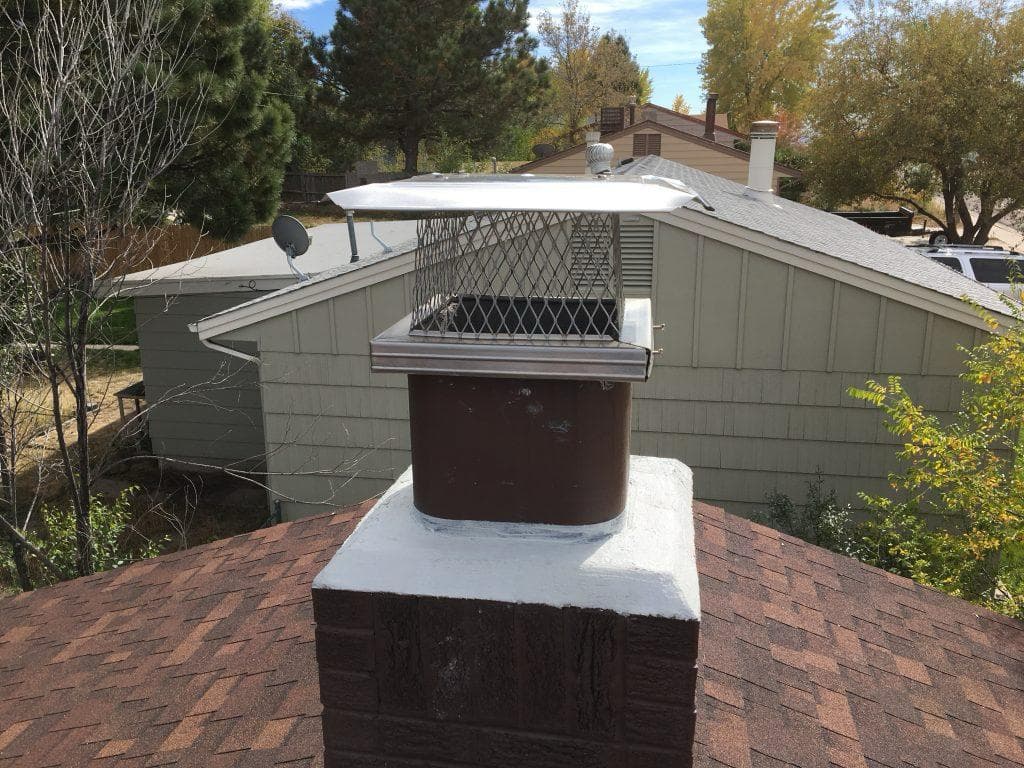
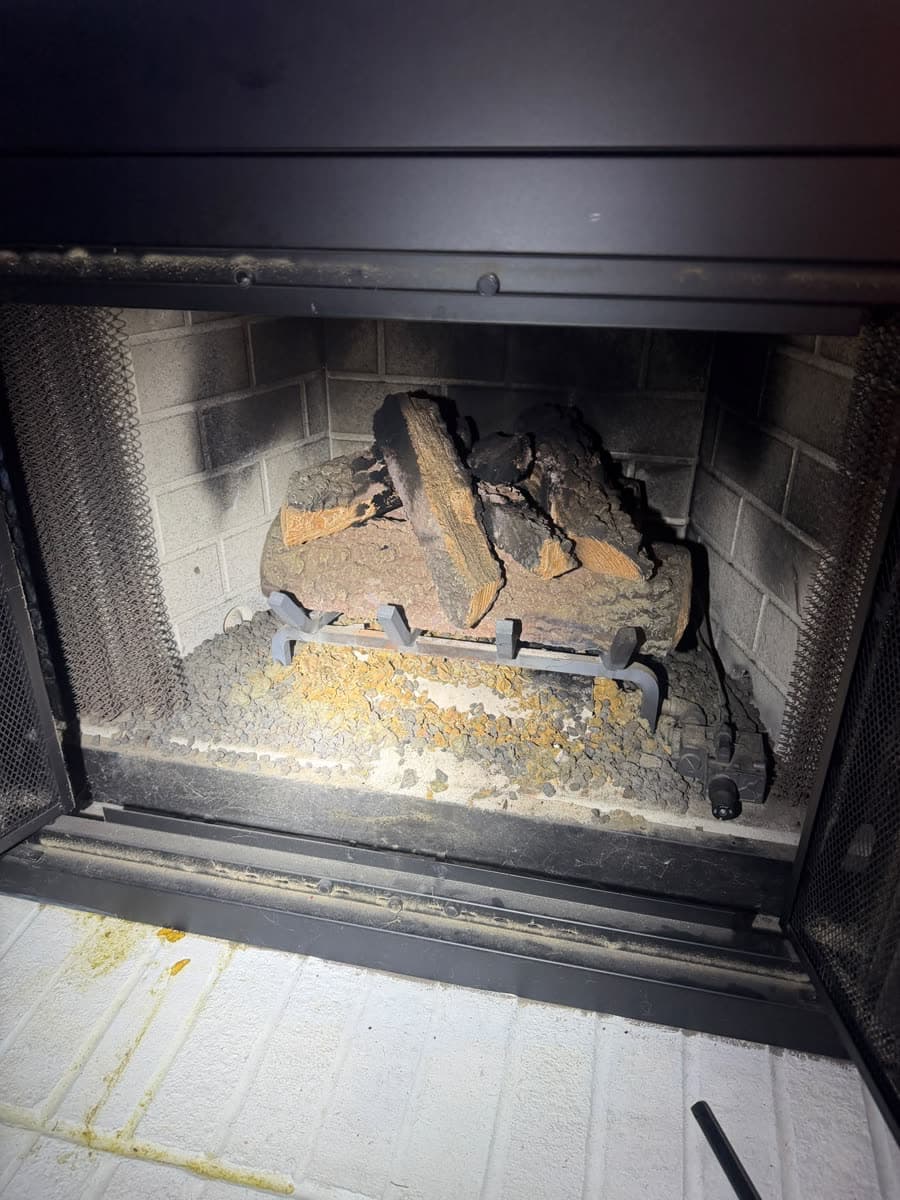
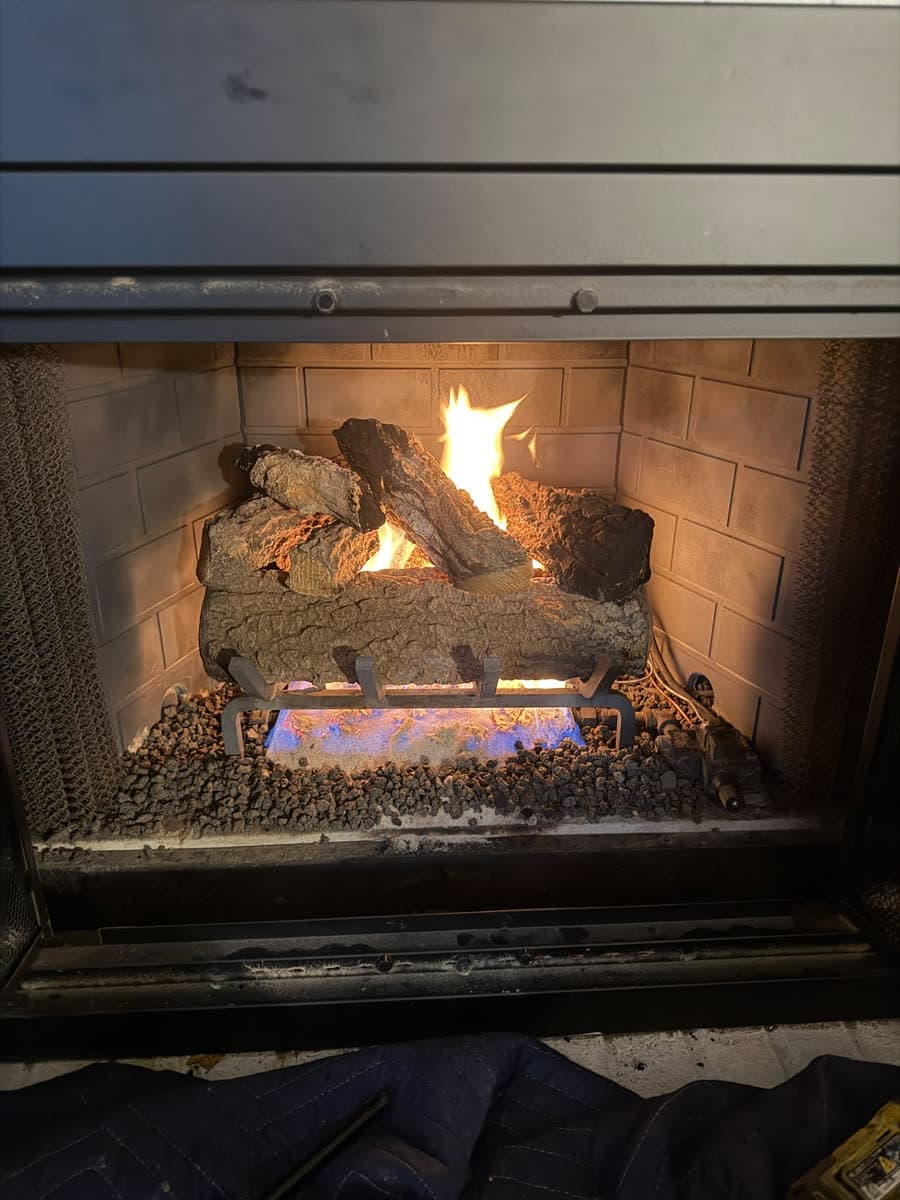
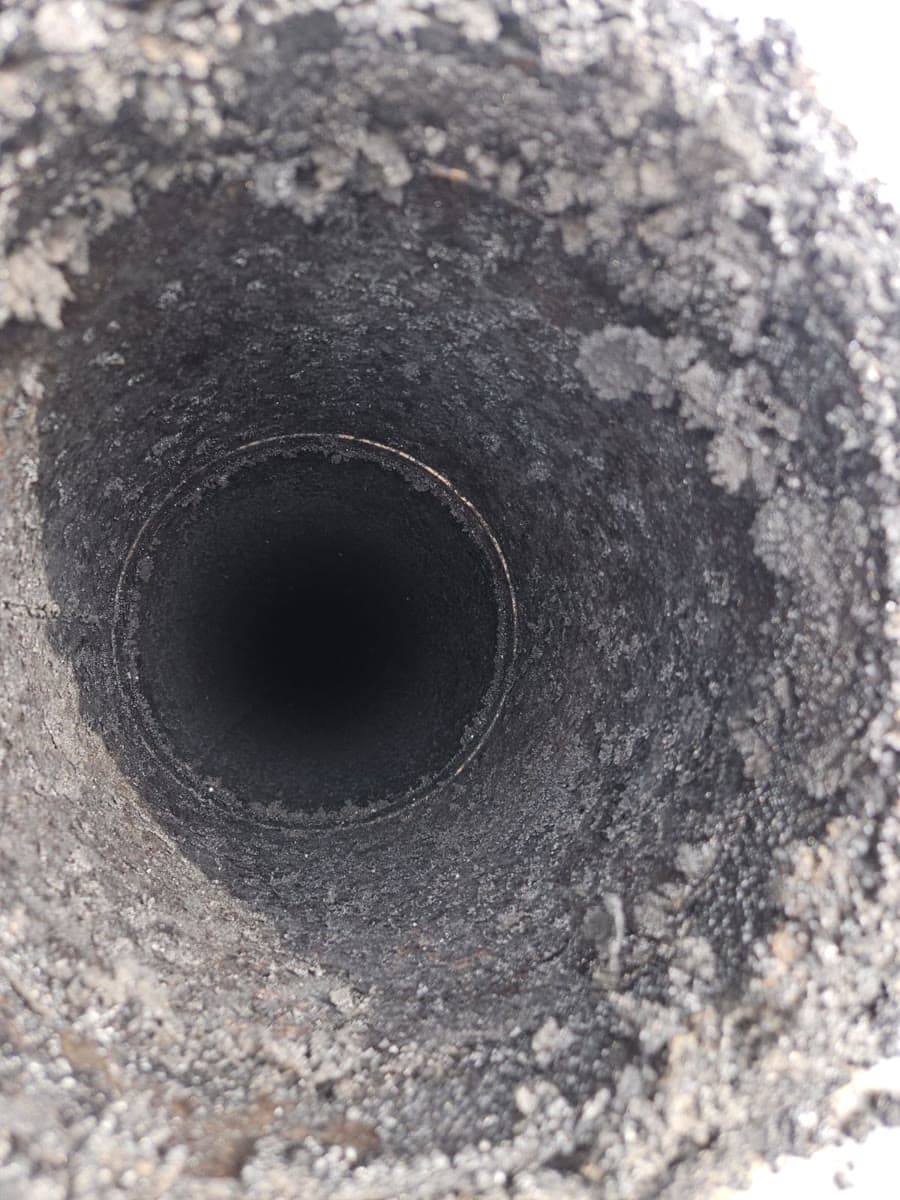
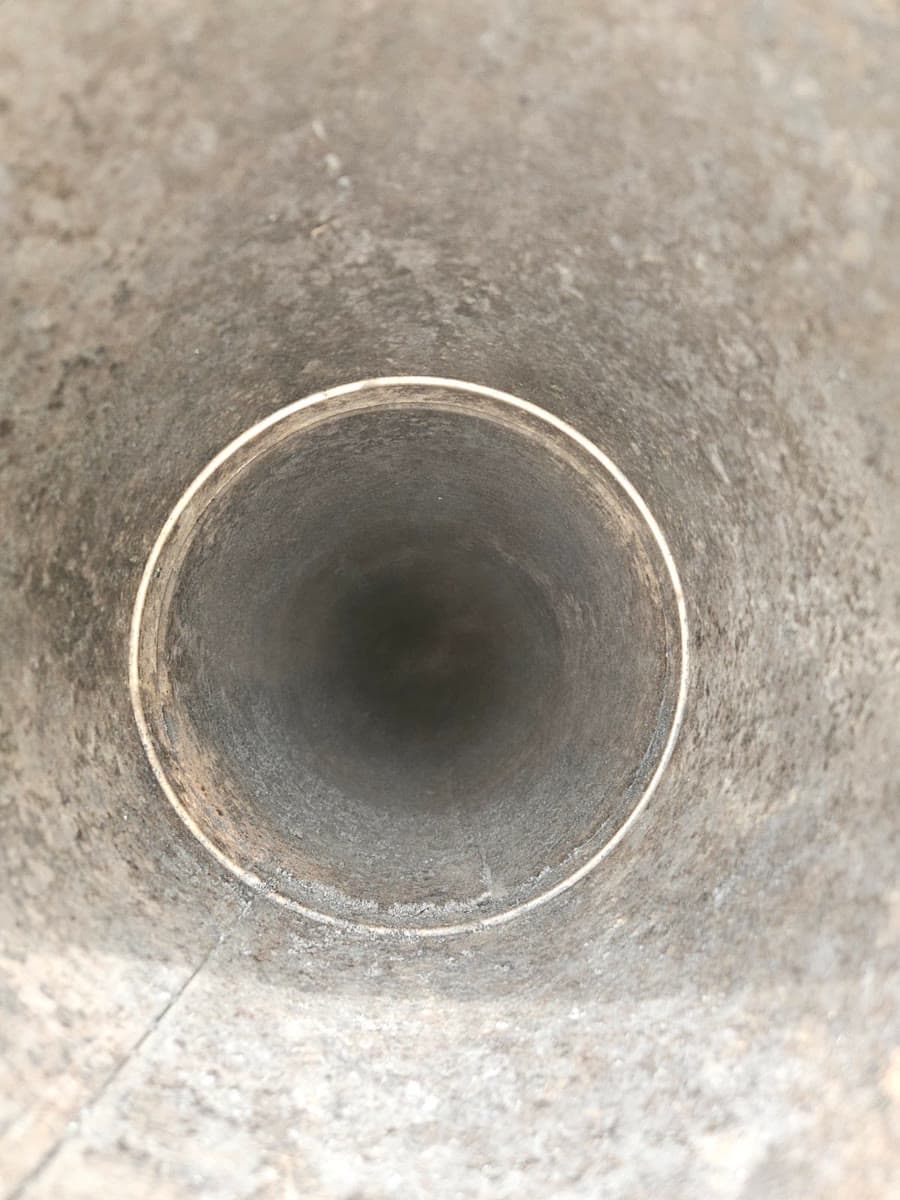
Actual jobs, actual chimneys, photographed by us. Every inspection we do produces pictures like these for your own house.
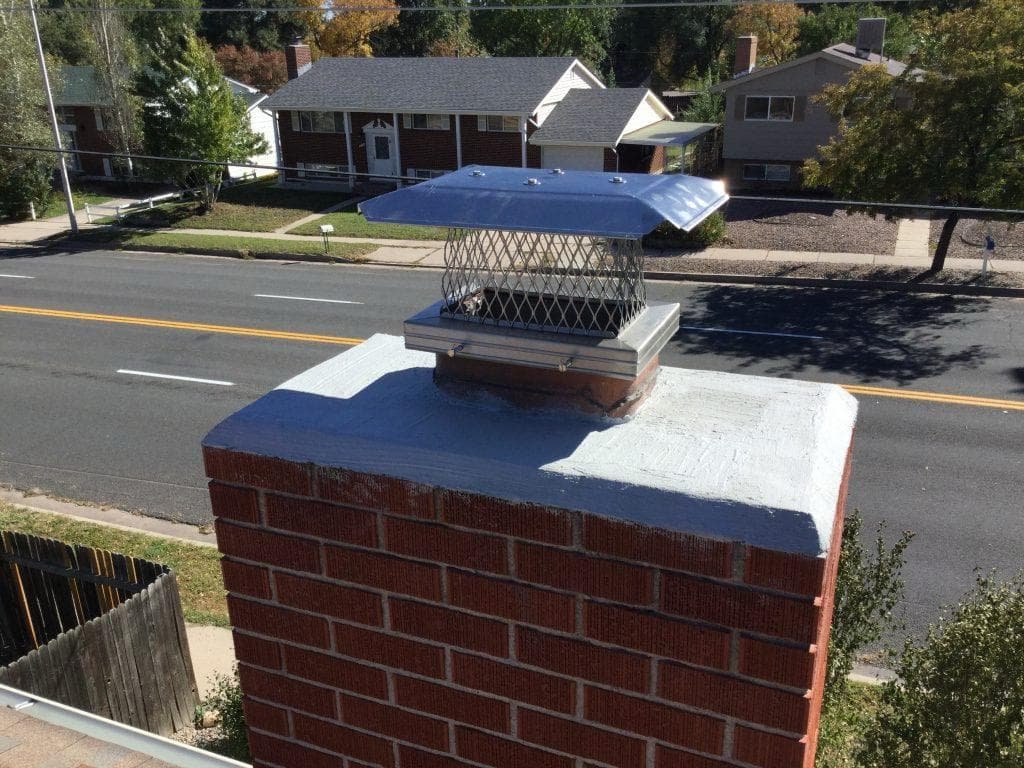
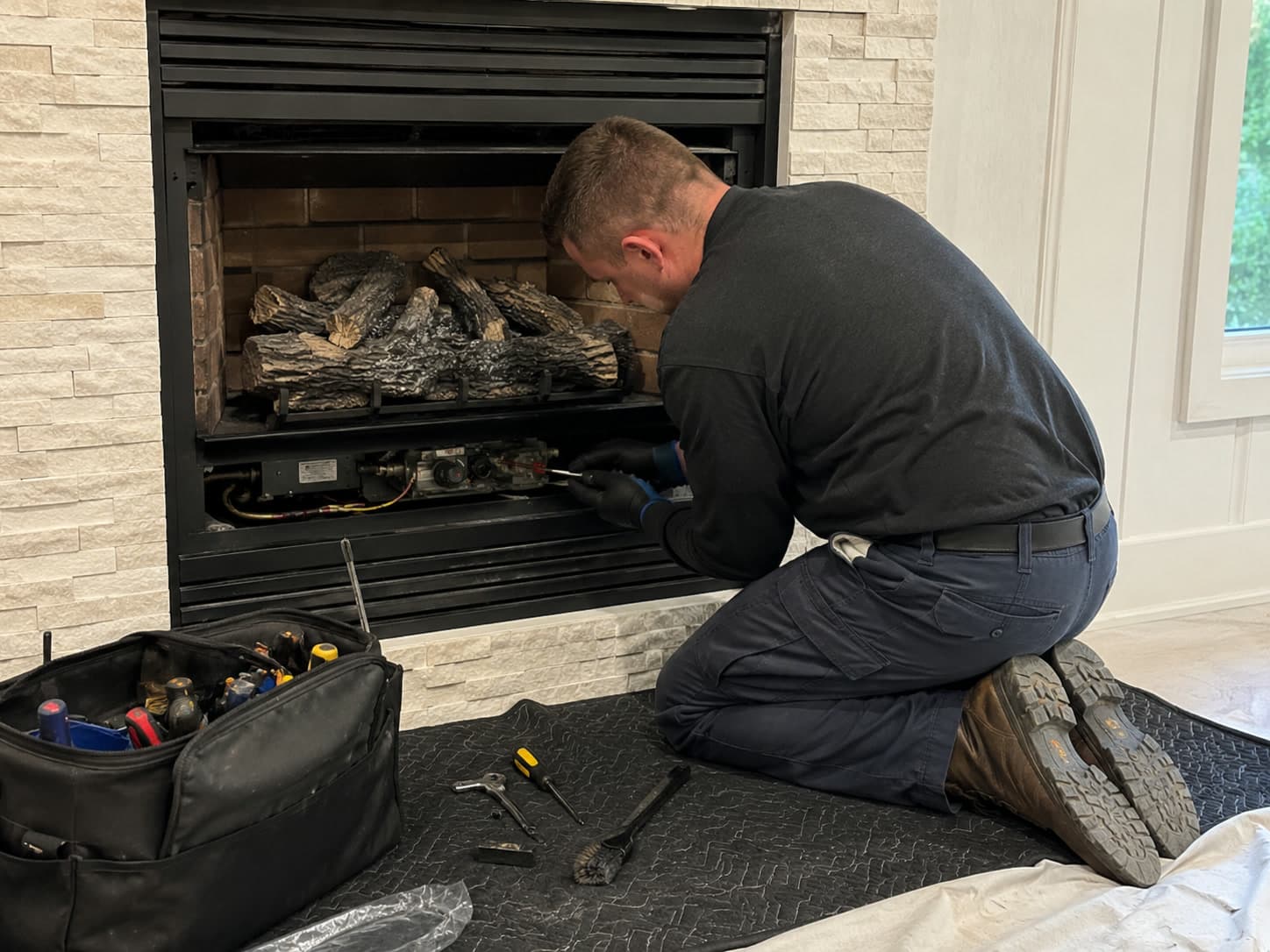
Before and after
Before
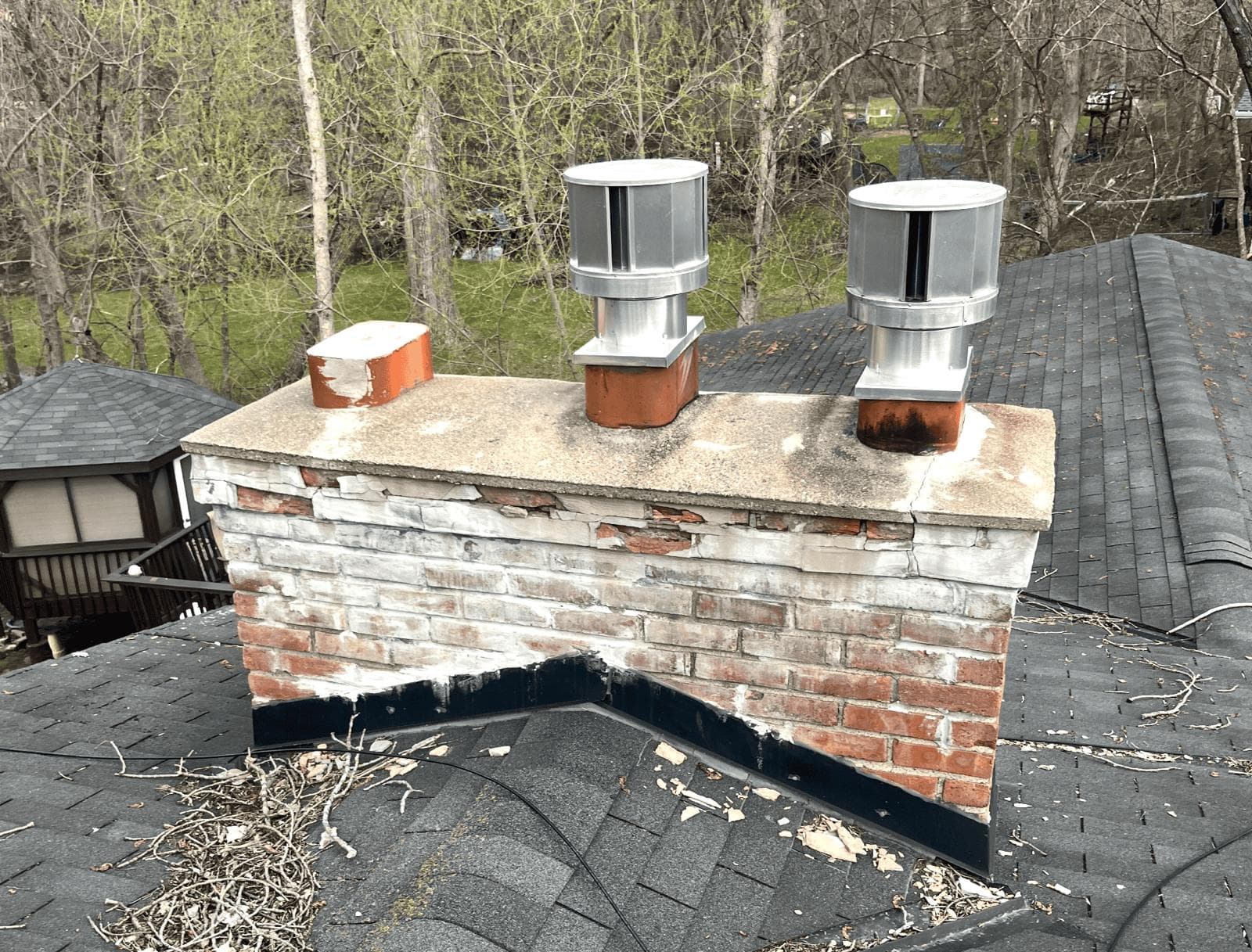
After
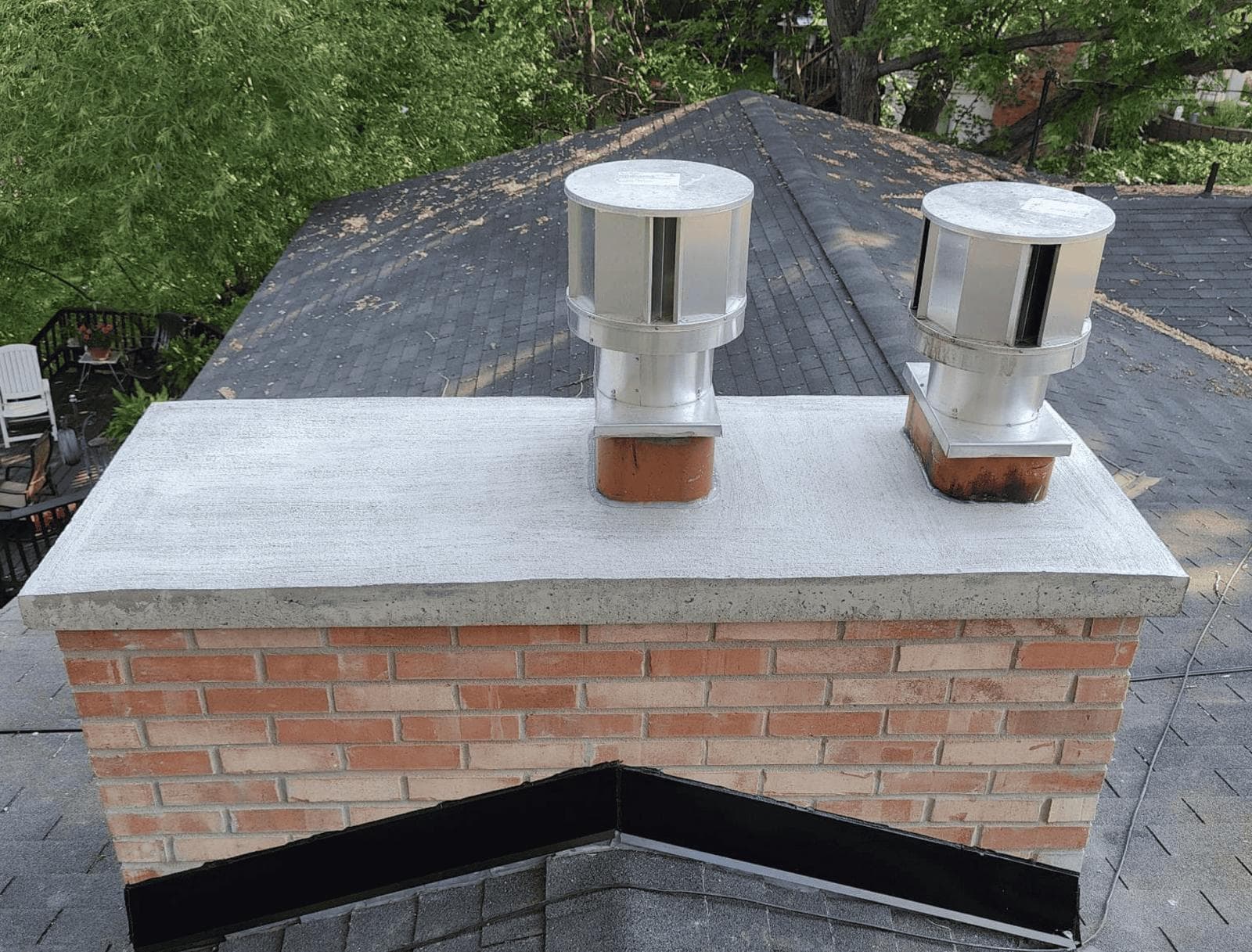
Before
After
Before
After
What customers say
5.0 from 60 Google reviews
“Showed up on time. Thorough service, provided pictures of the work before and after. They were in and out with no issues. Service person was super friendly and communicated clearly throughout the process.”
Patrick J. · Google review
“Total professional! Eli explained everything very thoroughly and was right on time... I feel better knowing my chimney was cleaned and inspected for the upcoming winter. Thanks Total Chimney Services”
Tim K. · Google review
“I have a direct gas fireplace that was giving me some trouble. Greg came by to my home in Saint Charles Missouri, and got the unit up and running like new. He was very helpful and informative, and I would use them in the future for my gas fireplace needs.”
Michael Z. · Google review
How we price the work
We do not publish repair prices, and we do not do free estimates. Both of those are ways of avoiding the actual question. Here is what we do instead.
You pay $69
Flat rate, anywhere in the metro. No trip charge, no fuel surcharge, no upsell to a 'premium' inspection.
We inspect and photograph
A real diagnostic — camera scan of the flue where the job calls for it, full safety assessment, pictures of everything we find.
You get one fixed price
In writing, in plain English, with what is urgent and what can safely wait until next year. You approve it before anything starts.
Book it, and the $69 comes back
The full $69 comes off the price of the work. If you go elsewhere, you keep the report and the photos and owe nothing more.
| Service | What determines your price |
|---|---|
| Chimney Inspection $69 | Flat $69 for a standard inspection, anywhere in the metro. No trip charge. Credited back in full against any repair you book with us. |
| Chimney Sweep Quoted up front | Depends on chimney height, roof access, the type of appliance, and how much buildup is present. You get one fixed price before we start. |
| Chimney Repair Starts with the $69 inspection | Repair pricing depends entirely on what failed and how far it has gone. The $69 inspection turns that into one fixed number, in writing, before you commit — and the $69 comes off the work. |
| Chimney Leak Repair Starts with the $69 inspection | We trace the source first — water testing and a camera scan where needed — then quote the actual fix as one fixed price. The $69 comes off the work. |
| Chimney Masonry & Tuckpointing Starts with the $69 inspection | Driven by chimney height, roof access, how much of the joint has failed, whether brick also needs replacing, and whether the mortar has to be matched to historic lime mortar. The $69 inspection turns all of that into one fixed price, and the $69 comes off the work. |
| Chimney Rebuild Starts with the $69 inspection | Depends on how far down the sound masonry starts, chimney height, roof access, whether the brick has to be matched to a historic home, and whether the flue is being replaced at the same time. The $69 inspection settles all of it into one fixed price, and the $69 comes off the work. |
| Chimney Cap Installation Starts with the $69 inspection | Depends on flue size and count, whether you need a single-flue cap or a full-crown cover, and the material — stainless steel or copper. The $69 inspection gets it measured and priced, and the $69 comes off the work. |
| Gas Fireplace Repair Starts with the $69 inspection | Depends on which component failed and whether the part is still manufactured for your model. The $69 inspection covers the diagnosis, you get a fixed price before we replace anything, and the $69 comes off the repair. |
| Gas Fireplace Inspection $69 | Flat $69, credited back in full against any repair you book with us. |
| Fireplace Repair $69 inspection, credited back | The $69 covers finding out what is actually wrong and showing you photographs of it. Repair pricing depends entirely on which system failed — a thermocouple and a rebuilt smoke chamber are not in the same universe — so we quote after we have looked, not before. |
| Chimney Odor & Smoke Smell Removal Starts with the $69 inspection | Odor almost always has more than one cause, so the price depends on what the inspection finds — a sweep, a cap or crown repair to stop moisture, a top-sealing damper to stop the downdraft, or some combination. You get one fixed price before anything starts, and the $69 comes off the work. |
| Chimney Animal & Bird Removal Starts with the $69 inspection | Depends on what is in there, how far down it is, roof access, and how much nesting material and droppings have to come out. Sanitizing and a cap are usually part of the fix. You get one fixed price before we start, and the $69 comes off the work. |
| Smoky Fireplace & Draft Repair Starts with the $69 inspection | The fix ranges from clearing a blockage to correcting a badly built smoke chamber, so the price follows the diagnosis. What we will not do is guess — you get the cause in writing with photographs and one fixed price, and the $69 comes off the work. |
| Chimney Relining Starts with the $69 inspection | Driven by flue height, whether the run is straight or offset, the liner diameter the appliance actually requires, whether the old clay tile has to come out first, and whether insulation is needed to meet clearance. None of that can be judged from the ground, which is why the camera inspection comes first and the $69 comes off the work. |
Where we work
Based in University City, serving the greater St. Louis metro across St. Louis City, St. Louis County, St. Charles County and Jefferson County.
St. Louis
Predominantly 1890–1930 brick
St. Louis City has one of the densest concentrations of pre-1930 brick housing anywhere in the country, and those chimneys were built with soft lime mortar and unlined or clay-tile flues. Many City homes have two, three or four separate flues in a single stack — one per fireplace plus the furnace — and it is common for only one of them to have ever been relined. On the older four-families and townhouses we regularly find flues that were abandoned decades ago and never sealed, which is how smoke ends up in a neighbor's unit.
University City
Largely 1920s–1940s brick, Tudor and Colonial
University City is where we are based, so it is usually the fastest response we can offer. The housing stock here is dominated by 1920s and 1930s brick — a lot of Tudor Revival with decorative chimney work that is beautiful and, unfortunately, full of exposed corners and offsets where water gets in. In the older parts of U City the original clay flue tiles are now approaching a century old and cracked tile is one of the most common findings we report.
Clayton
1920s–1940s masonry, plus newer infill
Clayton homes tend to be substantial masonry construction from the 1920s and 1930s, frequently with multiple fireplaces — a formal living room fireplace, sometimes a study or bedroom fireplace, and a separate furnace flue. That means multiple flues in one stack, and multiple opportunities for one of them to be quietly failing. We are also called out to a fair number of Clayton homes where a fireplace was closed off during a renovation without the flue being properly sealed or the damper addressed.
Kirkwood
Victorian through 1950s, wide mix
Kirkwood has one of the widest ranges of housing age in the county — genuine Victorians near the historic center, a lot of 1920s and 1930s homes, and postwar construction further out. That mix means we cannot assume anything before we look. A Victorian in Old Kirkwood may have an original unlined masonry flue that predates flue tile entirely, while a house six blocks away has a straightforward 1950s system. Both need very different work.
Webster Groves
Victorian, Craftsman and 1920s bungalows
Webster Groves is a historic-home town, and historic homes come with historic mortar. The most consequential mistake we see on Webster chimneys is repointing done with modern Portland-heavy mortar on soft, porous century-old brick. That makes the mortar harder than the brick, so the brick face spalls off instead of the mortar wearing — a repair that actively destroys the chimney. Matching the original mortar here is not optional.
Chesterfield
Mostly 1980s–2000s construction
Chesterfield is a newer-construction area, and that changes the job completely. Most fireplaces here are factory-built (prefabricated) units with metal chimneys inside a framed and sided chase, not solid masonry. Those systems have a real service life — typically 20 to 30 years — and a large share of Chesterfield homes are now hitting it. The most common thing we find is a rusted or deteriorated chase cover, the flat metal lid on top of the chase, which fails long before anything else and dumps water straight into the framing.
Also serving Ladue, Ballwin, Creve Coeur, Maplewood, Brentwood, Florissant, St. Charles, Des Peres, Fenton, St. Peters, Arnold, High Ridge, Festus. See all areas →
Common questions
How much does a chimney inspection cost in St. Louis?
Total Chimney Services charges a flat $69 for a chimney inspection anywhere in the St. Louis metro, with no trip charge, and credits the full $69 back if you book a repair with us.
How much does a chimney sweep cost in St. Louis?
We quote each chimney rather than publishing a range, because chimney height, roof access, the type of appliance and how much creosote has built up all change the number. Call (314) 887-7250 and we will price it for you.
How often should a chimney be inspected and swept?
The NFPA 211 standard is an inspection once a year, every year, whether or not you use the fireplace. Sweeping is done whenever there is measurable creosote buildup, generally about 1/8 inch or more. Animals, weather and settling damage a chimney even if you never light a fire.
Why do chimneys fail so often in St. Louis specifically?
Water plus freeze-thaw. St. Louis runs through roughly 40 to 50 freeze-thaw cycles a year. Water soaks into brick and mortar, freezes overnight, expands, and splits the masonry apart. Combine that with a housing stock where a large share of homes were built before 1940 with soft lime mortar and clay-tile flues, and you get the specific pattern of failures we see across this metro.
What areas of St. Louis do you serve?
We serve the greater St. Louis metro from our base in University City, including St. Louis, University City, Clayton, Kirkwood, Webster Groves, Ladue, Chesterfield, Ballwin and the surrounding communities in St. Louis City, St. Louis County, St. Charles County and Jefferson County.
Are you insured?
Yes. We carry professional liability insurance and will send a certificate of insurance on request, before any work starts. We are also Google Guaranteed through Google Local Services, which means Google ran a background check and verified our insurance before approving us.
Do you offer emergency chimney service?
Yes. We are available 24/7. If you have an active leak, a chimney fire, a blocked flue or a suspected carbon monoxide problem, call (314) 887-7250 at any hour.
Find out what's actually wrong — for $69
A full inspection with a photo report, credited back in full when you book the repair. No pressure, no guessing.
Open 24/7 · Emergency service, day or night.