Why Does My Ventless Gas Fireplace Keep Shutting Off?
When a vent-free (ventless) gas fireplace in a St. Louis home keeps shutting itself off, the cause is almost always its oxygen depletion sensor — the safety pilot that cuts the gas if it thinks the air in the room is getting thin. Sometimes it is right, and the room needs more air. More often the sensor is tripping because dust, lint or a slightly misplaced pilot flame is fooling it. Either way it is a safety device doing its job, and the fix is to find out which, never to bypass it.
Updated October 9, 2026
What makes a ventless fireplace different
Most gas fireplaces send their exhaust outside, either up a chimney or through a sealed direct-vent pipe in the wall. A vent-free unit does not. It is designed to burn so cleanly that it can release what it produces straight into the room: mostly water vapor and carbon dioxide, with very small amounts of other gases when it is working properly.
That design is the whole appeal, because the unit needs no flue and almost all of its heat stays in the house. It is also the reason a vent-free fireplace is less forgiving than a vented one. A vented unit that burns a little dirty sends the problem outside. A vent-free unit that burns a little dirty sends it into your living room.
The oxygen depletion sensor, and why it shuts the gas off
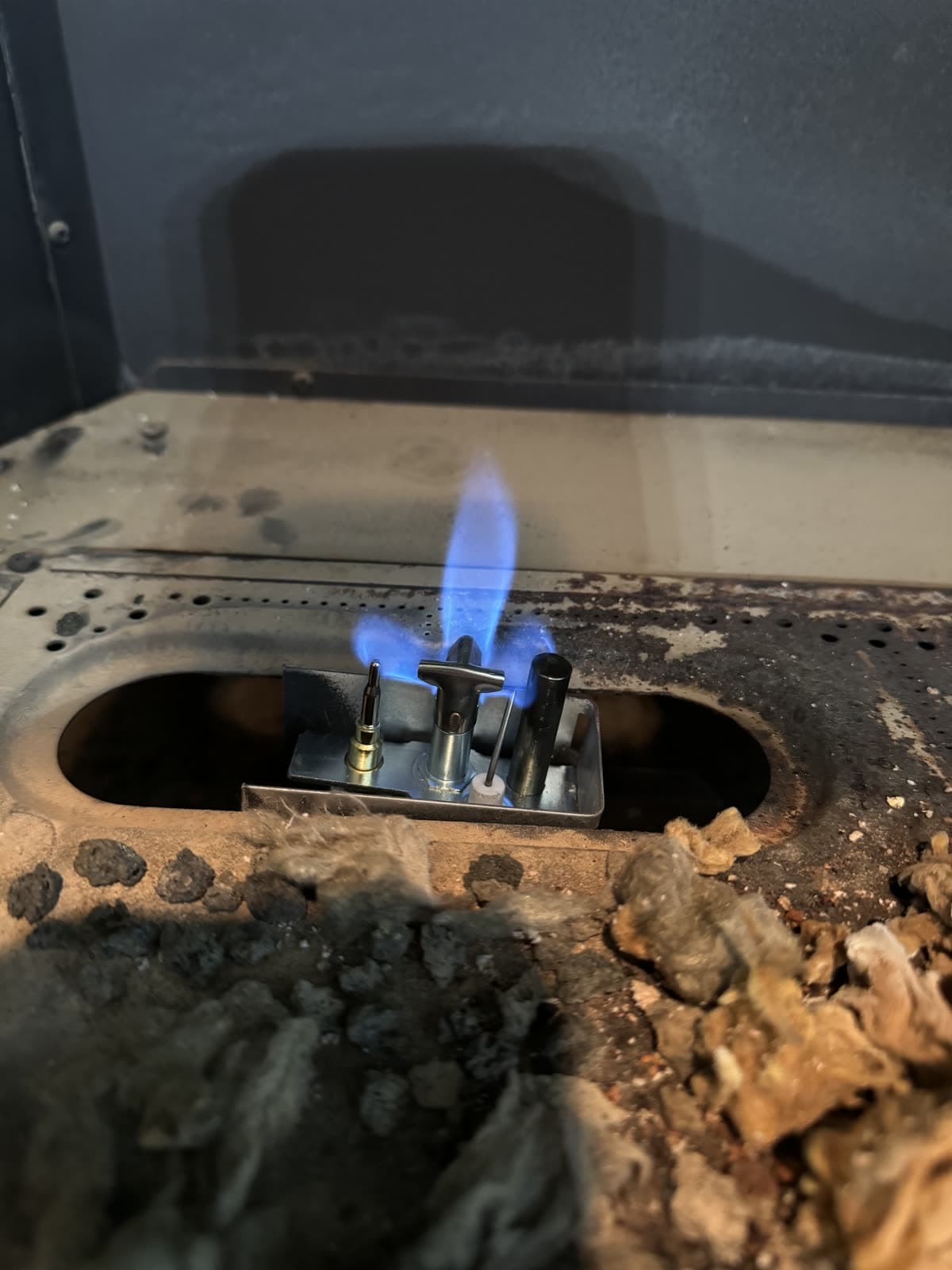
Every vent-free gas appliance has an oxygen depletion sensor, usually called the ODS. It is built into the pilot: a carefully shaped pilot flame that sits on a thermocouple. In normal air the flame stays planted on the thermocouple and the valve stays open. As oxygen in the room drops, the flame starts to lift and wander, the thermocouple cools, and the valve closes the gas.
So when the fireplace runs for a while and then goes out, it is not malfunctioning in the usual sense. The ODS is reporting that it no longer sees a healthy flame. The question is why.
The usual reasons it trips
Dirt in the pilot. This is the most common one. Dust, lint, pet hair and even spider webs collect in the small air opening of the ODS pilot over a season. The pilot flame then burns weak or lazy and lifts off the thermocouple even though the air in the room is fine. A unit that has sat unused all summer and starts shutting off on the first cold nights fits this pattern exactly.
A real lack of air. A vent-free unit running in a small room with the doors closed, or for hours at a time in a tight, well-sealed house, can genuinely draw the oxygen down. In that case the ODS is right, and the answer is ventilation and sensible run times, not a repair.
Drafts and gas pressure. A draft across the firebox can push the pilot flame off the sensor, and low gas pressure (or, on propane, a tank running low) shrinks the flame until it no longer holds. Both look identical to a dirty pilot from the outside.
A worn thermocouple or pilot assembly. Like any standing pilot, the sensor itself weakens with age. Past a certain point cleaning no longer helps and the ODS pilot assembly is replaced as a unit.
Other signs worth paying attention to
Soot on the logs or the wall above the fireplace means the burn is not clean, often because a log has been knocked out of position and the flame is hitting it. On a vent-free unit that matters more than on any other kind, for the reason above.
A persistent odor is another one. A light smell for the first minutes of the season, as dust burns off, is normal. A smell that lasts, makes eyes sting or gives people headaches is not, and the unit should be turned off until it has been checked.
Heavy condensation on windows when the fireplace runs is the water vapor it releases. Some is expected. A lot of it, in a tight house, is a sign the unit is running more than the room can handle.
What a service visit checks
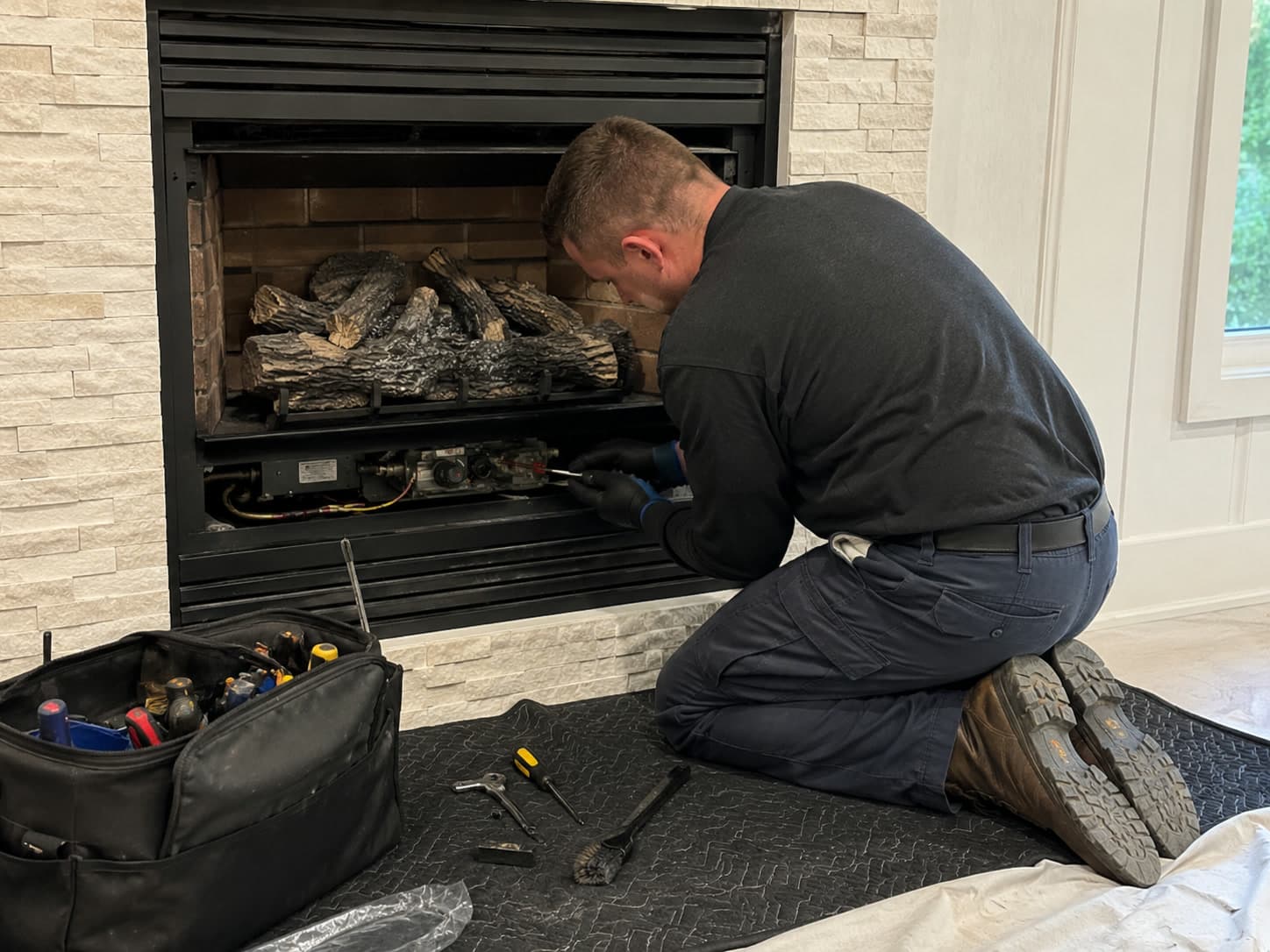
We clean the ODS pilot and burner, and check the logs are positioned exactly as the manufacturer specifies, because on a vent-free unit log placement is part of how cleanly it burns. We test the thermocouple, measure gas pressure, and run the unit while taking a carbon monoxide reading in the room. If the ODS pilot is worn, it gets replaced as an assembly. You get a fixed price before anything is replaced, and the $69 inspection fee is credited back against the repair.
What we will not do is disable or bypass the ODS to stop the shutoffs, and nobody should. It is the only thing standing between a vent-free fireplace and a room full of combustion gases.
Why this one is not a do-it-yourself fix
The parts involved are small and it is tempting to blow out the pilot and try again. But the conditions that make an ODS trip are the same conditions that produce carbon monoxide, which has no smell and early symptoms that feel like the flu. Have a working carbon monoxide alarm in the room, and if you ever smell gas, do not operate the fireplace or nearby light switches, leave the house, and call Spire at 800-887-4173 or 911 from outside.
What this looks like on a real job
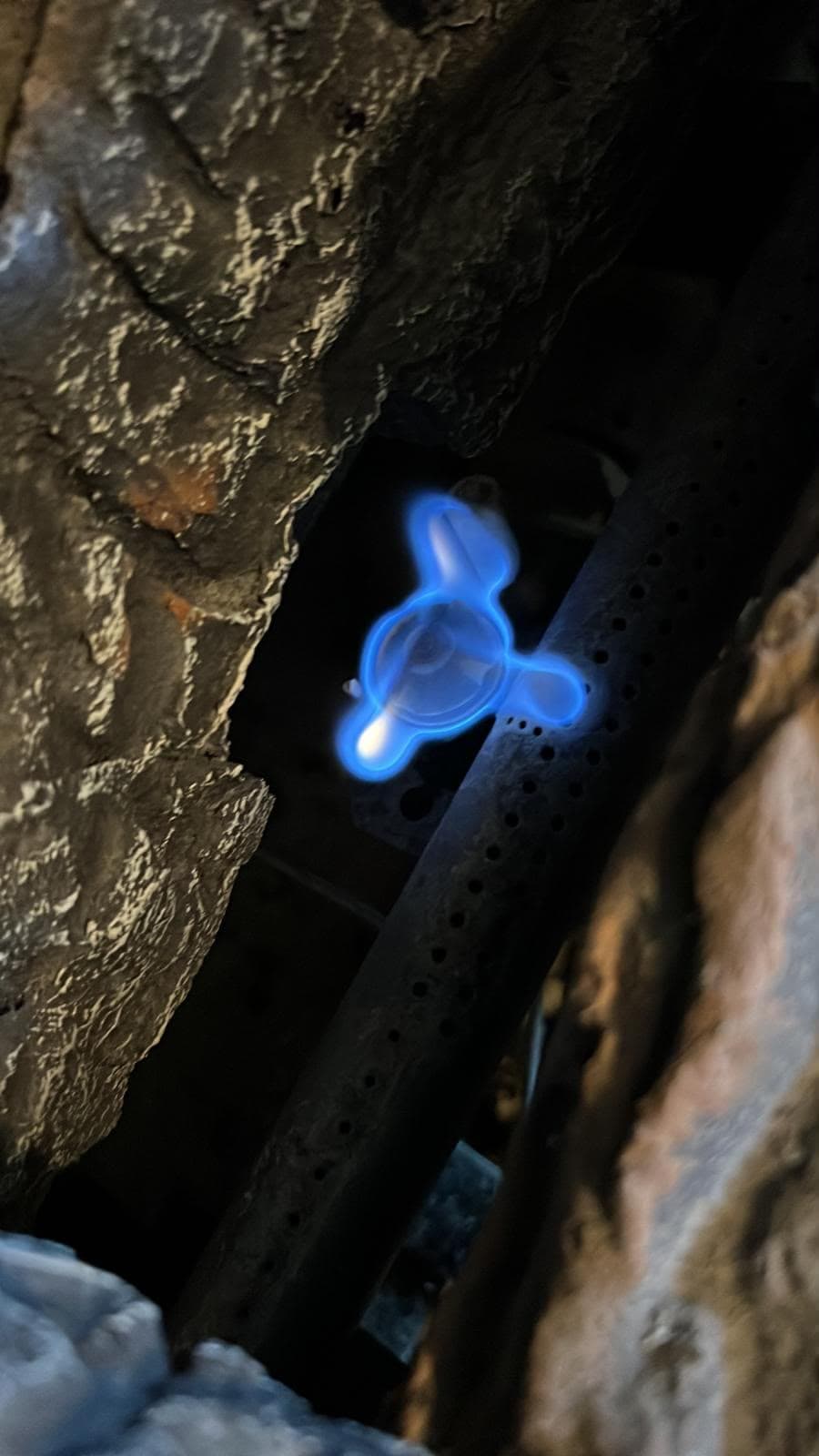
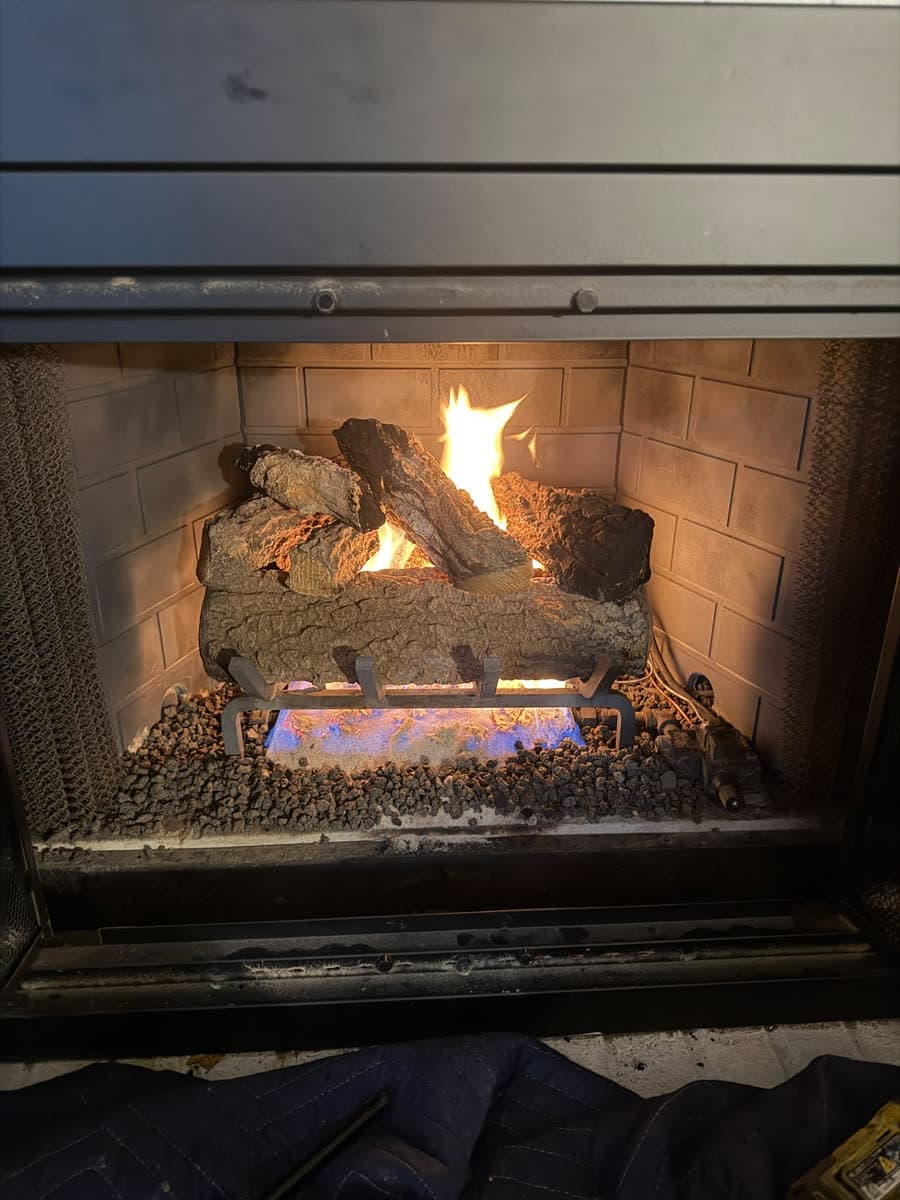
Photographs from our own work in the St. Louis metro.
Common questions
Are ventless gas fireplaces safe?
A vent-free fireplace that is installed correctly, sized for the room, serviced every year and has a working oxygen depletion sensor is designed to be used safely. The risk comes from units that burn dirty, run for hours in a closed room, or have had the sensor tampered with. That is why the annual service and a carbon monoxide alarm in the room matter more on a vent-free unit than on a vented one.
How long can I run a ventless gas fireplace?
Follow the manual and the rating plate for your model; many recommend limiting run time and cracking a window when it runs for long periods. If it shuts itself off before that, treat the shutoff as information rather than an inconvenience, because it means the sensor stopped seeing a healthy flame.
Can the oxygen depletion sensor just be cleaned?
Often, yes. Dust and lint in the pilot are the most common cause of nuisance shutoffs, and a proper cleaning of the pilot assembly fixes it. If the thermocouple or pilot is worn, cleaning stops helping and the ODS pilot assembly is replaced as one part.
Why does my ventless fireplace smell?
A brief smell at the start of the season is dust burning off and is normal. A smell that lasts, irritates the eyes or comes with headaches usually means incomplete combustion, often from logs out of position or a dirty burner. Turn it off and have it checked; if the smell is gas, leave the house and call Spire.
Can I put a ventless fireplace in a bedroom?
Building codes commonly restrict unvented gas appliances in bedrooms and bathrooms, and manufacturers set their own limits for room size. Check with us or your local building department before installing one there, and never in a room without a working carbon monoxide alarm.
If this sounds like your chimney
A $69 inspection tells you exactly which of these it is, with photos, before anyone quotes a repair.
Gas Fireplace Repair
Most gas fireplace problems come down to a failed thermocouple or thermopile, a dirty pilot assembly, a bad igniter, or a blocked vent. We diagnose with instruments rather than replacing parts and hoping, then quote the repair before doing it.
Gas Fireplace Inspection
A gas fireplace inspection checks the venting, gas connections, burner combustion and safety controls, and includes a carbon monoxide reading with the unit running. Ours is $69, credited back in full if you book a repair.
Not sure which one this is?
Start with a $69 inspection and a photo report. Credited back in full when you book the work. Call (314) 887-7250.
Open 24/7 · Emergency service, day or night.